
Risk report
The KION Group’s governance system
Core aspects of the governance system
The KION Group’s governance structure is based on an internal control system (ICS) and a risk management system (RMS) pursuant to section 91 (3) AktG, plus a compliance management system (CMS). The RMS includes the early-warning system for risk that is required by law in accordance with section 91 (2) AktG. These systems are designed to ensure that risks are managed in a forward-looking and targeted manner and that they are identified and dealt with at an early stage.
The business activities of the KION Group involve a variety of risks, but also opportunities. Important elements of corporate governance are therefore dealing with risks and opportunities responsibly and taking a targeted, strategic, and balanced approach to managing risks and opportunities. The aim is to harness business opportunities to the fullest possible extent while taking on risks in a controlled way. Risks to the Group’s ability to continue as a going concern should be avoided. The responsible management functions should therefore specifically decide whether to accept, transfer, or avoid risks or reduce them by taking suitable action to manage them.
The KION Group’s RMS is designed to detect, measure, and manage risks throughout the Company at an early stage. In this way, the system protects financial and non-financial assets and supports the achievement of the Company’s goals. The KION Group’s internal control system, which is geared toward the specific needs of the Company, covers the entirety of the systematically defined controls and monitoring activities that are designed to ensure the efficiency of the Company’s business operations, the reliability of its financial reporting, and compliance with legal provisions and internal policies.
The elements of the KION Group’s internal control system are structured in line with the internationally recognized framework for internal control systems developed by the Committee of Sponsoring Organizations of the Treadway Commission (‘COSO framework’). The system therefore features, as its main components, the control environment, risk assessment, control activities, information and communication, and ongoing monitoring. All consolidated subsidiaries of the KION Group are covered by the internal control system. The scope of the control activities to be carried out is dependent on the specific risks and their materiality for the consolidated financial statements of KION GROUP AG. The system and the methods applied are refined on an ongoing basis and are regularly assessed to ensure that they are functioning as intended. However, because of the limitations inherent in any control system, it is not possible to provide complete assurance.
Please refer to the information provided in the corporate governance statement for an assessment of the appropriateness and effectiveness of the risk management and internal control systems.
The CMS is modeled on audit standard 980 of the Institute of Public Auditors in Germany (IDW PS 980). The aim of the CMS is for all business activities to be conducted in accordance with applicable legal and ethical requirements. IDW PS 980 provides a structured framework for the design and implementation of an effective CMS that takes account of the specific risks and requirements of the KION Group and of the different fields of activity in its business segments.
The CMS follows a risk-oriented approach in which potential compliance risks should be detected at an early stage by means of regular analyses and reviews. Clear policies, training courses, and a binding Code of Compliance encourage responsible conduct. A multi-stage control system supports transparency, helps to identify violations promptly, and enables a rapid response with suitable corrective measures. Reporting channels have been established for whistleblowers, and responsibilities have been clearly defined.
The CMS, which is based on the fundamental principles of IDW PS 980, follows the core idea of ‘predict, prevent, detect, and respond’. This is done as part of a continuous improvement process in which the system is regularly reviewed and adjustments made if necessary. Data is shared across the CMS, RMS, and ICS to ensure that findings are incorporated into regular operations consistently and tracked on an ongoing basis. The intention in this regard is for the KION Group to be legally compliant and thus able to respond flexibly to regulatory changes and ensure its long-term competitiveness.
Material features of the internal control system pertaining to the (Group) accounting process
The core objective of the accounting-related internal control system is to avoid the risk of material misstatements in financial reporting, avoid mismeasurements, and ensure compliance with the applicable regulations and internal instructions. This includes verifying that the consolidated and separate financial statements and the combined management report comply with the relevant accounting standards. For its (Group) accounting process, the KION Group has defined clear structures and processes within its internal control system and embedded them in the organization.
The Corporate Accounting, Controlling & Tax group function coordinates the preparation of the consolidated and separate financial statements of KION GROUP AG. It specifies binding requirements for the reporting content to be provided by all subsidiaries, and manages and monitors adherence to the stipulated deadlines and processes. The relevant departments or experts from outside the Company are brought in to handle particularly complex issues and questions.
Changes to the law, accounting standards, and other pronouncements are continually analyzed with regard to their relevance and effect on the consolidated financial statements and group management report; the relevant changes are then incorporated into the Group’s internal policies and processes.
All consolidated entities must follow the KION Group IFRS Accounting Manual when preparing their IFRS reporting packages. This contains the recognition, measurement, and disclosure rules to be applied in the KION Group’s accounting in accordance with IFRS and primarily explains the financial reporting principles specific to the KION Group’s business.
The accounting-based internal control system is underpinned by written policies and procedures, the double-checking principle, and approval procedures. Another important aspect, the separation of functions, has been integrated into processes and systems. The employees involved in the Group accounting process receive regular training in these areas.
Those in charge of the control functions and senior managers regularly conduct control self-assessments in order to evaluate the appropriateness and operational effectiveness of the internal control system. The results are captured and documented in a central IT system. External reviews are also conducted for individual parts of the internal control system. Internal Audit regularly reviews the internal control system and accounting processes, including Group accounting. This review primarily covers the appropriateness and effectiveness of the internal control systems for avoiding financial losses, compliance with legal requirements, directives from the Executive Board, other policies, and internal instructions, and the correct performance of tasks and compliance with business principles. Any identified shortcomings to the controls are documented in the proper way and steps are taken to resolve the issues. The Executive Board of KION GROUP AG and the Audit Committee of its Supervisory Board are informed of the results of the self-assessments for the internal control system once a year.
Material features of the risk management system
Governance and groupwide scope
The KION Group’s RMS is based on the ISO 31000 standard, the COSO Enterprise Risk Management (ERM) 2017 Framework, the German Corporate Governance Code (GCGC), and the IDW PS 340 and IDW PS 981 audit standards. The KION Group thus fulfills its obligation to comply with statutory requirements and recognized standards.
Over the course of 2025, the KION Group refined its RMS in order to increase effectiveness, transparency, and resilience. These refinements included implementing new risk software for recording and managing risks. The software provides targeted support for the risk management processes and should increase efficiency and the use of potential synergies over the long term. The RMS has been implemented in all consolidated entities and in the group functions across the Group. It is managed centrally by the Corporate Risk Management group function.
Strategy and objectives of risk management
The RMS is aimed at increasing the enterprise value and fostering a sustained, risk-conscious corporate culture. It focuses on establishing a risk culture in which decision-making adheres to legal requirements and is financially sustainable and risk-conscious. Core aspects of this are the creation of a transparent framework, the definition of risk appetite and risk tolerance, and the ongoing monitoring of risk-bearing capacity. This should enable potential risks to the KION Group’s ability to continue as a going concern to be identified at an early stage and managed in accordance with the corporate strategy.
The KION Group defines risk-bearing capacity as the maximum risk that the Group can sustain without jeopardizing its ability to continue as a going concern. It uses a Monte Carlo simulation to calculate its total exposure. The results of the simulation plus a risk cushion are factored into the assessment of risk-bearing capacity. The RMS ensures that risk analyses are systematically integrated into management decisions and investment decisions and that potential losses, probabilities of occurrence, and management measures are transparent.
Organization of risk management
The KION Group’s RMS defines clear responsibilities. The Executive Board of KION GROUP AG has overall responsibility for the functioning and appropriateness of the system, while the centralized risk management function manages the process across the Group and ensures that the methodologies applied are consistent.
At the level of the Operating Units and central service functions, risk managers, risk controllers, and risk officers have been appointed to identify, measure, and manage risks. Defined reporting channels to the corporate risk officer and the corporate risk manager ensure a close link between centralized management and decentralized responsibilities.
Each business unit holds quarterly meetings, as does a central risk committee, enabling the groupwide coordination and assessments of the aggregate risk position. These bodies serve as a platform for groupwide risk dialogue in which existing and potential risks can be discussed in the round. In organizational terms, risk management is closely connected to the finance organization.
Risk-related information is captured, documented, and kept updated using specialist risk management software. Internal Audit and the external auditor supplement this structure with independent assessments. All employees are required to actively identify risks and report them to the appropriate bodies.
The KION Group’s risk organization
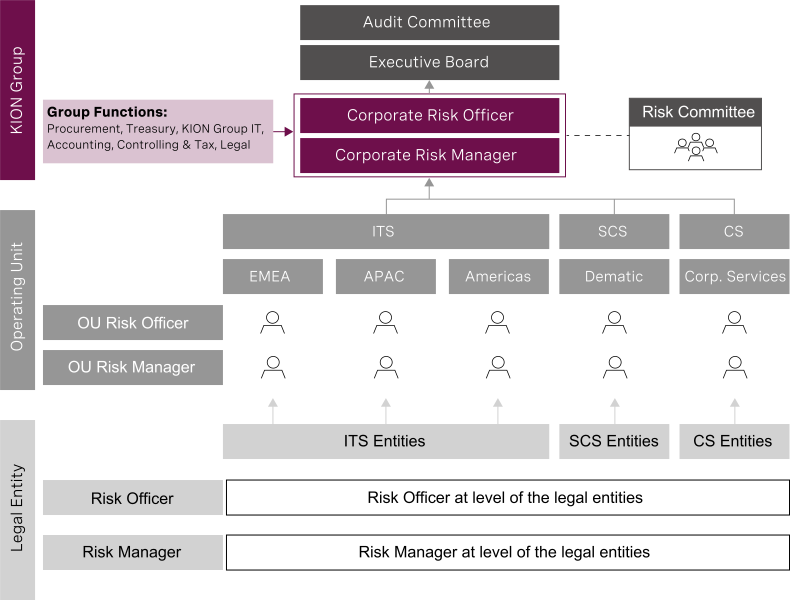
The RMS follows an end-to-end, management-oriented approach that is firmly embedded in the corporate structure. Rather than being included in the KION Group’s RMS, opportunities are actively managed as part of the strategic planning. The continuous risk management process comprises the systematic identification, measurement, management, reporting, and monitoring of risk.
Measurement approach
In the groupwide measurement process, risks are measured on both a gross and a net basis, i.e. disregarding and taking account of countermeasures. The basis is provided by the relevant time horizon, the probability of occurrence, and the financial impact. The time horizon is aligned with Group planning and equates to the period of the coming financial year, plus the medium-term planning period of up to three years for long-term risks. An even longer perspective is sometimes used, especially in the case of strategic or sustainability-related risks and for extreme risks.
Risks are measured and reported in a defined risk matrix on the basis of their probability of occurrence and potential impacts. The measurement of risk is generally expressed in quantitative terms as a deviation from the budgeted EBIT figure; the exception is risks that relate to net financial income/expenses and income taxes. If necessary, they are assessed qualitatively using defined classes.
In general, risks with a potential gross impact on EBIT that exceeds a defined threshold must be reported to the central risk management function. As part of its materiality analysis in accordance with CSRD requirements, the KION Group also considers ESG-related risks. This involves identifying and measuring them and then adding them to the risk inventory.
Risk inventory and simulation of the aggregate risk position
The KION Group defines clear limits for the type and scope of risks that are permitted to be taken on in pursuit of its strategic and operational objectives. The aim is for the exposure to strike a good balance between risk appetite, risk tolerance, and risk-bearing capacity. To calculate the total exposure, the individual risks are aggregated using a Monte Carlo simulation, taking account of correlations and dependencies. This method enables the risk distribution and the value-at-risk to be analyzed. It also helps with the calculation of risk-bearing capacity at Group level. The results of the simulation form the basis for the continual assessment of the aggregate risk position relative to the defined risk-bearing capacity. The KION Group thereby ensures that risks are aggregated consistently, dependencies are appropriately taken into account, and any potential developments are identified at an early stage. In this way, the KION Group strengthens its resilience to uncertainties and supports the forward-looking and risk-conscious management of the Company.
Risk management
In the KION Group, risks are – depending on the defined risk strategy – actively managed or, where justifiable, consciously accepted. The management process consists of preventive and reactive measures aimed at reducing both the probability of occurrence and the potential level of losses. The effectiveness of these measures is reviewed as part of the quarterly risk reporting and communicated to Corporate Risk Management. Changes to risk measurements are systematically documented and included in the risk reporting at various levels of the organization. They are discussed in the relevant risk committees and subsequently presented to the Executive Board and to the Supervisory Board’s Audit Committee of KION GROUP AG. These structured and standardized processes ensure that the KION Group manages its exposure to risk consistently and effectively.
Monitoring of the risk management system
As part of its monitoring, the KION Group ensures that the risk management system meets the Group’s internal requirements, complies with external regulatory requirements, and is continually refined. The aim is to ensure that the system is efficient, transparent, and effective at all times. This monitoring approach, which incorporates a regular review conducted by Internal Audit, supports the ongoing optimization of processes because the main elements of the RMS are regularly reviewed and improved. The results of monitoring form the basis for the continual refinement of the RMS and help to strengthen not only risk awareness but also the quality of risk management throughout the KION Group.
Changed measurement approach
ESRS 1.119 (a) The KION Group revised its approach to measuring risk in 2025. Instead of the 3x3 risk classification previously used, measurement is now based on a 5x5 risk classification so that the probability and impact of risks can be classified more precisely. Unlike under the measurement approach used in 2024, the reporting period now extends beyond the twelve-month forecast period and thus also encompasses longer-term risks. This can affect both the probability of occurrence and the impact of the risks. The presentation of the risk categories is no longer based solely on the gross view used in the past. Instead, it now applies an updated methodology for the aggregated assessment of risk based on a net view (after countermeasures).
|
Dec. 31, 2024 |
|
Dec. 31, 2025 |
|---|---|---|---|
Impact Class |
in € million |
Impact Class |
in € million |
High |
≥ 250 |
Severe |
≥ 100 |
Medium |
≥ 50 – < 250 |
Major |
≥ 50 – < 100 |
Low |
0 – < 50 |
Medium |
≥ 25 – < 50 |
|
|
Low |
≥ 5 – < 25 |
|
|
Insignificant |
> 1 – < 5 |
|
|
|
|
Probability Class |
in percent |
Probability Class |
in percent |
High |
≥ 75 – 99.9 |
Very likely |
≥ 75 – 99.9 |
Medium |
≥ 25 – < 75 |
Likely |
≥ 50 – < 75 |
Low |
0.1 – < 25 |
Possible |
≥ 25 – < 50 |
|
|
Unlikely |
≥ 5 – < 25 |
|
|
Rare |
0.1 – < 5 |
In 2025, the existing risk catalog was revised in respect of sustainability-related risks and, in accordance with the requirements of the CSRD, additional ESG risks were added. Drawing on the double materiality analysis carried out in accordance with these new regulations, the identified ESG risks were integrated into the KION Group’s risk management in 2025. These are included in the risk inventory in the following categories: environmental risks (environmental), external risks (social), and HR risks (corporate governance) (ESRS 2 IRO-1 paragraph 53 c ii.).
In 2025, risks were identified that could have a material influence on the KION Group. The risks are measured according to their impact and probability of occurrence and classified as either low, medium, high, or very high.
The following table provides an aggregated overview of the risk assessment for the material risks. Risks are aggregated by weighting relevant individual risks in the various risk categories. The risk categories are classified according to the intervals defined in a risk matrix. The change in the expected value compared with the previous year is also shown.
|
|
|
Gross Assessment |
|---|---|---|---|
|
|
|
Dec. 31, 2024 |
Category |
Impact Class |
Probability Class |
Risk Classification |
Market Risks |
High |
Low |
Medium |
Marketing Risks: Competition Risks |
Low |
Medium |
Low |
Procurement Risks |
Medium |
Low |
Low |
Risks arising from Customer Project Business |
High |
Medium |
High |
Production Risks |
Medium |
Low |
Low |
IT & Data Security Risks |
Medium |
Low |
Low |
Financial Risks |
Medium |
Low |
Low |
HR Risks |
Medium |
Low |
Low |
Risks from Leasing Business |
Low |
Low |
Low |
Legal Risks |
Low |
Low |
Low |
Environmental Risks |
Low |
Low |
Low |
Tax Risks |
Low |
Medium |
Low |
External Risks |
Low |
Medium |
Low |
|
|
|
Gross Assessment |
|---|---|---|---|
|
|
|
Dec. 31, 2025 |
Category |
Impact Class |
Probability Class |
Risk Classification |
Market Risks |
Severe |
Unlikely |
High |
Competition Risks |
Severe |
Possible |
High |
Procurement Risks |
Major |
Unlikely |
Medium |
Risks arising from Customer Project Business |
Severe |
Possible |
High |
Production Risks |
Major |
Possible |
High |
IT & Data Security Risks |
Severe |
Likely |
Very High |
Financial Risks |
Medium |
Possible |
Medium |
HR Risks |
Severe |
Unlikely |
High |
Risks from Leasing Business |
Insignificant |
Rare |
Low |
Legal Risks |
Major |
Likely |
High |
Environmental Risks |
Severe |
Possible |
High |
Tax Risks |
Major |
Possible |
High |
External Risks |
Severe |
Unlikely |
High |
|
|
|
Net Assessment |
|---|---|---|---|
|
|
|
Dec. 31, 2025 |
Category |
Impact Class |
Probability Class |
Risk Classification |
Market Risks |
Severe |
Unlikely |
High |
Competition Risks |
Severe |
Possible |
High |
Procurement Risks |
Major |
Unlikely |
Medium |
Risks arising from Customer Project Business |
Severe |
Possible |
High |
Production Risks |
Low |
Likely |
Medium |
IT & Data Security Risks |
Severe |
Unlikely |
High |
Financial Risks |
Low |
Possible |
Medium |
HR Risks |
Medium |
Unlikely |
Medium |
Risks from Leasing Business |
Insignificant |
Rare |
Low |
Legal Risks |
Medium |
Unlikely |
Medium |
Environmental Risks |
Severe |
Unlikely |
High |
Tax Risks |
Medium |
Possible |
Medium |
External Risks |
Major |
Unlikely |
Medium |
Overall statement on the risk situation
In the KION Group’s assessment, the overall risk situation remained stable compared with 2024. Although conditions remained challenging, particularly in terms of the economic and geopolitical environment, no risks had been identified as at the reporting date that – either individually or taken together – could jeopardize the Company’s continuation as a going concern. This assessment is based on the analysis of the total exposure and the calculation of risk-bearing capacity.
Risk matrix (net view) as at December 31, 2025
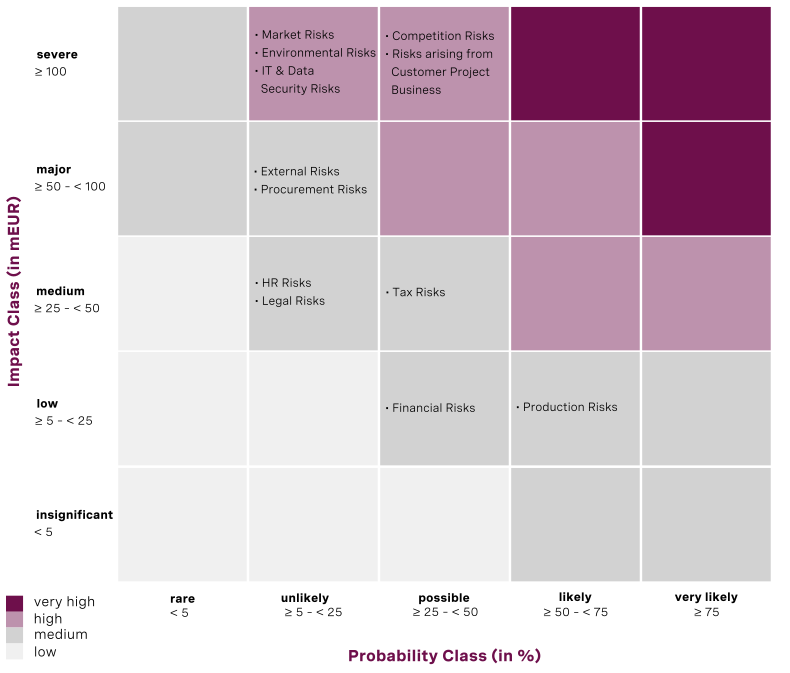
ESRS 2.53 (c) ii.
Material risks
Market risks
Market risk can arise if the economy as a whole or the relevant sector does not perform as well as had been anticipated in the outlook.
In the Industrial Trucks & Services segment, the market outlook for 2026 assumes a small increase in order numbers. However, the KION Group does see a risk that order intake could decline, contrary to expectations. This would take its toll on the financial performance of the Industrial Trucks & Services segment.
In the market for warehouse automation solutions, which is the market relevant to the Supply Chain Solutions segment, the KION Group anticipates a marked year-on-year increase in order intake in 2026, supported by data from Interact Analysis.
Cyclical fluctuations in macroeconomic activity affect both the market for industrial trucks and the market for warehouse automation solutions, although the latter generally has greater immunity to economic cycles because the capital expenditure decisions have a longer-term perspective.
Customers’ investment activity depends to a large degree on the macroeconomic situation and conditions in their particular sector. This means that there is a risk that the KION Group’s revenue expectations for 2026 have been set too high.
As the KION Group can only adjust its fixed costs to fluctuations in demand to a limited extent and with a delay, reductions in revenue impact on earnings. Despite the importance of the North American sales market, particularly for the Supply Chain Solutions segment, and the prospective further growth in the volume of business in China, the bulk of the KION Group’s revenue continues to be generated in the EMEA region. As a result, the market conditions that prevail in Europe impact significantly on the Group’s financial performance.
Risks in connection with trade disputes and geopolitical conflicts and tensions may also hinder the global economy’s growth in some regards. The main areas of focus are potential trade barriers and ongoing geopolitical disputes that, for example, create a greater risk of problems with the availability of commodities and of higher prices for commodities. The KION Group will also continue to carefully monitor the dispute between the People’s Republic of China and Taiwan. If the situation becomes even more entrenched, there is a risk of shortages in the semiconductor market – for example, due to restrictions on the availability of rare earths – that could have an indirect impact on the Company. In the medium term, new barriers to trade could significantly hamper sales opportunities and lead to renewed disruption to global supply chains that would have a knock-on effect on production.
All these factors could have a negative impact on customers’ willingness to invest and thus on demand for the KION Group’s products and services, resulting in a decline in revenue. However, it is not currently foreseeable whether such market risks will occur and then have a material effect on the business situation and financial performance.
Further developments in the geopolitical situation, including any knock-on effects that change the level of risk, are monitored closely. Measures taken in both operating segments should help to contain the earnings risk arising from reductions in revenue as a result of economic conditions. Diversification of the customer base in terms of industry and region and the expansion of service activities also play a role in mitigating risk.
Moreover, the KION Group closely monitors the market so that it can identify market risks at an early stage and adjust its production capacities in good time. Besides global economic growth and other data, the KION Group also analyzes exchange rates, price stability, the consumer and investment climate, foreign trade activity, and political stability in its key sales markets, constantly monitoring the possible impact on its financial performance and financial position.
Given its severe impact and unlikely probability of occurrence, market risk is classified as high overall after countermeasures (net).
Competition risks
The two operating segments are at risk of losing market share to competitors and coming under increased price pressure. This could result in lower levels of revenue than expected for the segments and thus for the Group.
The markets in which the KION Group operates are characterized by strong competition, often price-driven. Price competition is compounded by some manufacturers having cost advantages, in some cases due to the currency situation and in some cases because local manufacturing costs are lower. This mainly affects the Industrial Trucks & Services segment, where price competition is fierce, particularly in the economy and volume segments. The KION Group mitigates this risk though a wide range of product variants made possible by modular concepts, along with good availability of services, mainly in the volume and premium segments.
It is possible that competitors will join forces and their resulting stronger position will be detrimental to the KION Group’s sales opportunities. Moreover, predictions of higher volumes and margins may lead to overcapacity, which would put increased pressure on prices. Although the excellent customer benefits provided by its products and services have enabled the KION Group to charge appropriate prices until now, it is taking – and will continue to take – a variety of steps to contain competition risk. These include entering into joint ventures, alliances, and strategic partnerships, encouraging innovation, and implementing measures to reduce product costs.
Given its severe impact and possible probability of occurrence, competition risk is classified as high overall after countermeasures (net).
Procurement risks
Procurement activities constitute a potential risk for the KION Group in terms of the general availability of parts and components and the rising cost of raw materials, inputs and intermediate products, logistics services, and energy.
The cost of materials, energy, and logistics are key factors in the KION Group’s cost structure. Geopolitical developments can cause procurement prices, for example the price of energy commodities, to increase suddenly. Moreover, geopolitical shocks may severely disrupt supply chains and restrict suppliers’ capacity. The KION Group obtains some components from a limited number of suppliers. The resulting potential supply bottlenecks in respect of the KION Group’s end customers could lead to temporary decreases in earnings as well as to inefficiencies in production. The systematically pursued program of collaborative demand and capacity management for suppliers, which is aimed at preventing future problems, proved its worth in the reporting year.
The KION Group has initiated countermeasures in order to mitigate problems with suppliers and in respect of sales to customers. For example, the supplier base has been further diversified in order to tackle potential disruption in the supply chains, and suppliers are being closely monitored in the context of the global procurement function. The objective is to take further steps to increase diversification in 2026. In addition, dedicated project teams continually monitor supply chains, the availability of materials, and suppliers’ ability to fulfill orders. For critical materials, the KION Group has also increased its buffer of inventories.
Given its major impact and unlikely probability of occurrence, procurement risk is classified as medium overall after countermeasures (net).
Risks arising from customer project business
In the customer project business of the Supply Chain Solutions segment, risks can arise from deviations from the schedule originally agreed with the customer, potentially leading to an increase in project costs, delayed recognition of revenue and profit until subsequent years, and the imposition of contractual penalties. Another possible risk is that the technology deviates from the promised specifications, which may result in additional completion costs and contractual penalties. A high degree of complexity in the technical specification of customer solutions can lead to unexpected cost increases over the term of individual projects that were not anticipated in the project costing and cannot be (or cannot be fully) passed on to the customer. If these risks were to occur, it would have a negative impact in terms of the expected revenue and adjusted EBIT. Given the complexity of the influencing factors, project-specific risk management is carried out that entails continual monitoring throughout the term of the project. Consequently, the definition of the technical aspects of quotations includes a detailed evaluation of the risks plus financial risk provisioning based on the individual project specifications. A multi-stage approval process based on an extensive list of criteria is intended to ensure that technological, financial, country-specific, currency-specific, and contractual risks are mitigated to the greatest extent possible.
The potential risks that may arise in the project realization phase are monitored in every individual project using detailed continuous reviews of the individual items of work that make up the project. This enables corrective measures to be taken at an early stage and thus keeps risks under control. In the customer project business, the aforementioned risks of disruptions to the supply of components would mainly manifest themselves in the form of isolated project delays and increased expenditure on project realization.
Given its severe impact and possible probability of occurrence, risk arising from customer project business is classified as high overall after countermeasures (net).
Production risks
Production risks are largely caused by quality problems, possible disruptions to operational procedures, or production downtime at individual sites. They can also materialize as secondary risks resulting from the aforementioned procurement risks. There is also a risk that structural measures and reorganization projects will not be implemented owing to ramp-up difficulties, disruption of production, or strikes. Delays in delivery or a rise in the number of quality defects could harm the KION Group’s standing with its customers and, as a result, could harm its financial situation.
The KION Group reduces production downtime risk by carrying out preventive maintenance, implementing fire protection measures, and training its staff. To manage risk, critical elements of the value creation process are identified and the impact that would materialize if they were disrupted is assessed. Contingency plans and, in some cases, redundant production processes have been put in place as a preventive measure. Insurance is taken out to limit the financial impact where there is potential for loss events to occur. Quality assurance is a high priority throughout the value chain and reduces possible quality-related risks arising from the products and services provided. The KION Group mitigates its quality-related risks by applying rigorous quality standards to its development activities, conducting stringent controls throughout the process chain, and maintaining close contact with customers and suppliers.
Given its low impact and likely probability of occurrence, production risk is classified as medium overall after countermeasures (net).
IT and data security risks
The KION Group continually refines its IT system environment in order to counter migration risk when updating software as well as any IT and data security risks that may arise from the failure of IT systems and IT infrastructure. Internal IT resources are pooled in the cross-segment KION Group IT function, which has well-established processes for project management. Independent external reviews are conducted to provide additional quality assurance.
The number of attacks on companies’ global IT infrastructure that can be attributed to organized crime or industrial espionage has increased significantly. Failure of critical systems, disruption of production and the ability to deliver to customers, and the loss or release into the public domain of data are among the potential consequences of these attacks. Losses are also possible because a successful cyberattack can result not only in financial losses and liability risk but also reputational damage.
Various technical and organizational measures have been implemented with the aim of protecting the KION Group’s data against unauthorized access, misuse, and loss. These measures include, in particular, action to protect and defend against cyberattacks on IT systems. The KION Group’s cyber defense strategy is aimed at providing continuous protection for all processes and systems, particularly those that are business-critical. For example, procedures are in place to validate and log access to the Group’s infrastructure. The KION Group has also implemented a cybersecurity tool stack to provide optimum protection against existing or future cyber threats. Other key countermeasures include continuous vulnerability scans of the entire IT infrastructure and regular penetration testing of critical systems.
Given its severe impact and unlikely probability of occurrence, IT and data security risk is classified as high overall after countermeasures (net).
Financial risks
Financial risk encompasses liquidity risk, currency risk, interest-rate risk, and counterparty risk. In the context of corporate finance, counterparty risk relates to credit risks attaching to financial institutions too. Financial risk also includes the risk of impairment, particularly of the Group’s goodwill and brand names. Groupwide policies stipulate how to deal with the aforementioned risks.
Exceeding the agreed maximum level of leverage as at a specific reference date, thereby giving lenders a right of termination, is a particular risk in connection with the agreed bond, lending, and promissory note conditions. Exercise of a right of termination may also give rise to a cross-default situation that could trigger a right of termination in respect of the other contracts. If these funding instruments are terminated, the KION Group will need to agree new financing, probably on less favorable terms.
Some of the Group’s financing takes the form of variable-rate or fixed-rate financial liabilities. Interest-rate swaps are used in some cases to reduce the interest-rate risk arising from the variable-rate financial liabilities. This mitigates the risk of rising finance costs in a risk scenario with increasing inflation and more restrictive monetary policy.
To minimize the counterparty risk attaching to financial institutions, the KION Group only works with investment-grade financial institutions.
Because of the high proportion of its business conducted in currencies other than the euro, the KION Group is exposed to currency risk and opportunities. These result mainly from fluctuations in exchange rates in connection with future cash flows – both revenue and costs – that are denominated in foreign currencies. In the Industrial Trucks & Services segment, 75 percent of the currency risk related to the planned operating cash flows based on liquidity planning is normally hedged by currency forwards in accordance with the risk management policy. The Supply Chain Solutions segment hedges against currency risk on a project-by-project basis. As a further natural hedge against currency risk, the KION Group endeavors, where possible, to make payments in the currencies in which cash inflows are generated.
Each Group company’s liquidity planning is broken down by currency and incorporated into the KION Group’s financial planning and reporting process. The liquidity planning is checked on an ongoing basis and used to determine the funding requirements of each company. The funding terms and conditions faced by the lenders themselves (manifested, for example, in the payment of liquidity premiums on interbank lending) may result in a future shortage of lines of credit and/or increased financing costs for companies.
The individual Group companies directly manage counterparty risks involving customers. They use a credit management system for identifying customer-related counterparty risks at an early stage and initiating the necessary countermeasures.
Goodwill and brand names with an indefinite useful life represented 24.0 percent of total assets as at December 31, 2025 (December 31, 2024: 24.4 percent). Pursuant to IFRS, these assets are not amortized and their measurement depends, above all, on expectations about the future financial performance of the KION Group. If these future expectations are not fulfilled, there is a risk that impairment losses will have to be recognized on these assets. Any such impairment losses can have an adverse and substantial non-cash impact on earnings and affect the balance sheet ratios. Regular monitoring of goodwill is important for identifying potential risks at an early stage and taking suitable steps to ensure the financial stability of the Company. This monitoring is carried out as part of the routine year-end processes and not as part of the risk management process. That is why the monitoring of goodwill, of the recoverability of investments in affiliated companies, and of the recoverability of loans does not form part of the risk matrix.
Given its low impact and possible probability of occurrence, financial risk is classified as medium overall after countermeasures (net).
Human resources risks
The KION Group relies on having highly qualified skilled workers and managers in key roles. If they left, it could have a long-term adverse impact on the Group’s prospects. That is why the KION Group actively engages in HR work aimed at identifying and developing young professionals with high potential who already work for the Company and retaining them over the long term, thereby enabling succession planning for key roles across the Group. The KION Group also positions itself in the external labor market as an employer of choice. Firstly, this should enable it to make strategic additions to its portfolio of existing staff and, in this way, avert the risk of possibly losing expertise. Secondly, access to highly skilled workers helps to lay the foundations for future profitable growth.
Any efficiency enhancement measures, capacity adjustments, or restructuring necessary to secure the Company’s long-term competitiveness may result in a risk of strikes and reactions of other kinds by the workforce. The KION Group is committed to doing all it can to limit the negative impact on the workforce of such measures and, if job losses are necessary, taking steps to ensure they are achieved with the minimum possible social impact. At sites where codetermination arrangements provide for the workforce to be involved in decision-making, the KION Group engages in constructive talks on these matters with the employee representatives.
Defined benefit obligations are subject to an annual actuarial valuation and the future payment obligations are discounted. A reduction in the discount rate increases the present value of the defined benefit obligations and therefore decreases equity. A further risk arises from the fact that if the return on the plan assets of the KION pension plan in Germany falls below the minimum guaranteed interest rate that exists in some cases, the KION Group is required to make up the difference. This may result in higher payments in respect of defined benefit obligations. The KION Group aims to limit this risk by adopting a suitable investment strategy.
Given its medium impact and unlikely probability of occurrence, HR risk is classified as medium overall after countermeasures (net).
Risks arising from lease business
The lease activities that are used to promote sales in the Industrial Trucks & Services segment mean that the KION Group may be exposed to residual value risks from the marketing of trucks. The trucks are returned by the lessee at the end of a long-term lease and subsequently sold or re-rented. Residual values in the markets for used trucks are constantly monitored and forecast on the basis of prices in these markets. The KION Group regularly assesses its total exposure arising from the lease business.
Risks identified in relation to the existing contract portfolio are taken into account by prospectively adjusting the depreciation expense, recognizing impairment losses, or recognizing provisions, which therefore reduces the level of adjusted EBIT. If there is a sustained decline in residual values, they will be adjusted in the costing of new leases. Groupwide standards to ensure that residual values are calculated appropriately, combined with an IT system for residual-value risk management, aim to reduce risk and provide the basis on which to create the transparency required.
Long-term leases with end customers are primarily arranged on a fixed-interest basis. If they are financed using variable-rate instruments, interest-rate derivatives are entered into in order to hedge the interest-rate risk, where it makes commercial sense to do so. Nevertheless, the lease business is still subject to interest-rate-volatility risk related to residual, non-matching maturities. The level of this risk depends in part on the relevant market interest rates.
As a rule, the KION Group finances its lease business in the same currency as the lease with the end customer in order to exclude currency risks.
The counterparty risk inherent in the lease business continues to be insignificant. The Group also mitigates any losses from defaults by its receipt of the proceeds from the sale of repossessed industrial trucks. Furthermore, receivables management and credit risk management are refined on an ongoing basis.
Given its insignificant impact and rare probability of occurrence, risk arising from lease business is classified as low overall after countermeasures (net).
Legal risks
The legal risks arising from the KION Group’s business are typical of those faced by any company operating in this sector, for example in connection with warranties or employment-law matters. The Group companies are a party in a number of pending lawsuits in various countries. The individual companies cannot assume with any degree of certainty that they will win any of the lawsuits or that the existing risk provision in the form of insurance or provisions will be sufficient in each individual case. These lawsuits relate, among other things, to liability risks, especially as a result of legal action brought by third parties because, for example, the Company’s products were allegedly faulty or the Company allegedly failed to comply with contractual obligations. Overall, the KION Group is not expecting any of these existing legal proceedings to have a material impact on its financial position or financial performance.
There are also risks arising from the need to implement regulatory requirements intended to facilitate a circular economy and mitigate climate change and from the implementation of regulatory requirements restricting the use of certain pollutants. These risks are also captured and assessed as appropriate.
Further legal risks exist in connection with potential breaches of data protection laws, including in relation to the processing of personal data and the documentation of such processing. For example, serious breaches of the European General Data Protection Regulation (GDPR) can lead to fines of up to 4 percent of the previous year’s revenue.
Owing to the KION Group’s export focus, legal risks arise due to the numerous international and local export controls that apply. The Company mitigates these risks with a variety of measures. Consequently, export controls are an important part of the compliance activities carried out by the Group companies.
Risks may also arise due to potential contraventions of regulations or laws, such as violations of anti-corruption legislation or of antitrust and capital markets legislation.
The Company has taken measures to prevent it from incurring financial losses as a result of these risks. Although legal disputes with third parties have been insignificant both currently and in the past, the Company has a centralized reporting system to record and assist pending lawsuits. The Company applies high quality and safety standards to the use of its products and in product development and manufacturing, and it has also taken out the usual types of insurance to cover any third-party claims. In addition, interdisciplinary teams work on the avoidance of risks arising from inadequate contractual arrangements. A further objective of this cooperation across functions is to ensure compliance with mandatory laws, regulations, and contractual arrangements at all times.
Reputational risks are secondary risks that can arise from legal risks as well as other types of risk. Involvement in legal proceedings and investigations into non-compliance with laws could harm the reputation of the KION Group and of the individuals responsible. This could result in the loss of customers and have a negative impact on the positioning of the brand companies in the competitive arena. As they are qualitative in nature, reputational risks are not quantified and therefore do not form part of the risk matrix.
Given its medium impact and unlikely probability of occurrence, legal risk is classified as medium overall after countermeasures (net).
Environmental risks
The KION Group’s business activities necessarily give rise to circumstances involving environmental risk that may have a negative impact on the KION Group and the entire value chain. In addition to the effects of global warming, these include the possible use of potentially polluting substances and the generation of potentially harmful emissions in the value chain. Environmental risk is identified as part of the regular double materiality analysis and also in the context of the individual risks recorded by the reporting entities in the RMS.
Extreme weather events that disrupt or halt supply chains represent a material risk that could have a negative financial impact on the KION Group. The environmental effects of global warming and the growing frequency of extreme weather events, such as storms and flooding, may lead to unstable supply chains, shortages of materials, and thus higher prices for materials.
A full or partial ban on per- and polyfluoroalkyl substances (PFAS) could lead to supply disruptions that would have significant financial implications for the Group if no – or only limited supplies of – alternative components could be sourced at short notice.
Given its severe impact and unlikely probability of occurrence, environmental risk is classified as high overall after countermeasures (net).
Tax risks
The KION Group also takes tax risks into account. Uncertainty regarding the interpretation and application of tax laws may lead to unexpected tax charges. In addition, changes in tax legislation or disputes with the tax authorities may lead to financial risks. Potential consequences include back payments and penalties.
To minimize these risks, the KION Group continuously monitors the tax rules and adjusts its tax strategy accordingly. Tax advisors or other external experts are consulted for particularly complex or specialist matters.
Given its medium impact and possible probability of occurrence, tax risk is classified as medium overall after countermeasures (net).
External risks
External risks are events or developments outside the Company’s direct sphere of influence that, nonetheless, could have considerable effects on operating processes, financial results, and the strategic positioning. The material categories of external risk primarily include changes in the trade policy environment (such as rising tariffs on imports), geopolitical uncertainties, and reputational risk caused by being portrayed in a negative light on social media.
Changes in international trade and tariff policy can have direct implications for procurement, production, and sales structures. Higher import tariffs can significantly increase the cost of imported intermediate products and finished goods, thereby putting pressure on margins. Geopolitical tensions – including territorial disputes, sanctions, political instability, and the blockading of global transportation routes – can cause considerable disruptions for international business models. Digital communication channels have fundamentally changed the dynamic of reputational risk. Regardless of whether it is correct, distorted, or false, information spreads incredibly quickly on social media and may affect customers’, partners’, investors’, and employees’ trust.
Given its major impact and unlikely probability of occurrence, external risk is classified as medium overall after countermeasures (net).
Research and development (R&D) risks
The KION Group’s market success and business performance depend to a large extent on its ability to tailor its products and services to the specific needs of the various industries in which its customers operate. Key to this is the integration of the hardware (industrial trucks and automation solutions), software (vehicle control and warehouse management systems), and services (from repair to financing) into a single offering. The Group therefore needs to continually develop products that meet customer expectations and comply with changing regulatory and technological requirements. To this end, the KION Group must anticipate customers’ needs and changing market conditions and has to quickly bring new products to market. If the Company fails to do this, there could be lasting damage to its technological and competitive position, leading to a decline in revenue over the medium to long term.
The KION Group mitigates research and development risks by focusing firmly on customer benefit in its development of products and solutions. Customer needs are to be incorporated into the development process on an ongoing basis by ensuring close collaboration between sales and development units and taking account of all region-specific requirements. As at the reporting date, no material R&D risks had been identified that would have required measurement and therefore inclusion in the risk matrix.