Macroeconomic conditions
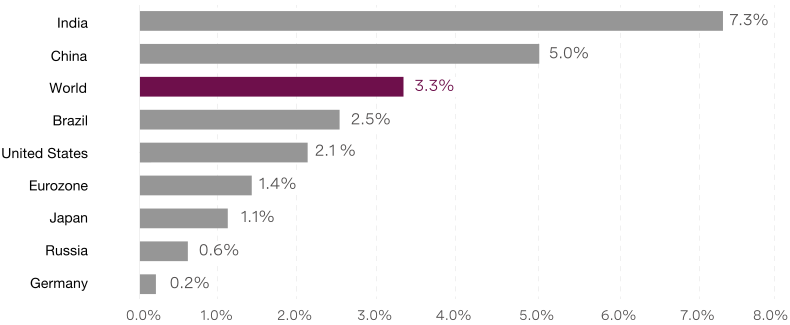
The pace of global economic growth remained moderate in 2025. In its January 2026 outlook, the International Monetary Fund (IMF) estimates that global economic output grew by 3.3 percent in 2025 and was thus on a par with the prior year. Economic conditions were influenced by a variety of factors, both positive and negative, in the year under review. Trade conflicts weighed heavily on the global economy, as did structural challenges such as high government debt in some countries. At the same time, however, economic growth received a boost from brisk investment in technology- and AI-related sectors and from continued favorable financing conditions.
Advanced economies grew by 1.7 percent in 2025 (2024: 1.8 percent). The rate of expansion in the eurozone edged up to 1.4 percent (2024: 0.9 percent) but remained muted overall. In the US, growth slowed to 2.1 percent following a strong prior year (2024: 2.8 percent).
Emerging markets and developing countries expanded by 4.4 percent (2024: 4.3 percent). At 5.0 percent, China maintained its growth rate at the prior-year level (2024: 5.0 percent).
According to the IMF, overall global inflation fell from 5.8 percent in 2024 to 4.1 percent in 2025. At 2.5 percent, the inflation rate in advanced economies continued to move closer to the relevant target corridor. Emerging markets and developing countries recorded an inflation rate of 5.2 percent, which was down significantly on the prior-year rate of 7.9 percent. Overall, inflation declined more slowly than originally expected, which meant that monetary policy remained cautious and, on the whole, restrictive in most major economies.
The volume of global trade, which had increased by a moderate 3.6 percent in 2024, grew by 4.1 percent in 2025. This growth was primarily attributable to trade activities brought forward amid elevated uncertainty regarding tariffs.
Gross domestic product in 2025 – year-on-year change in real terms